
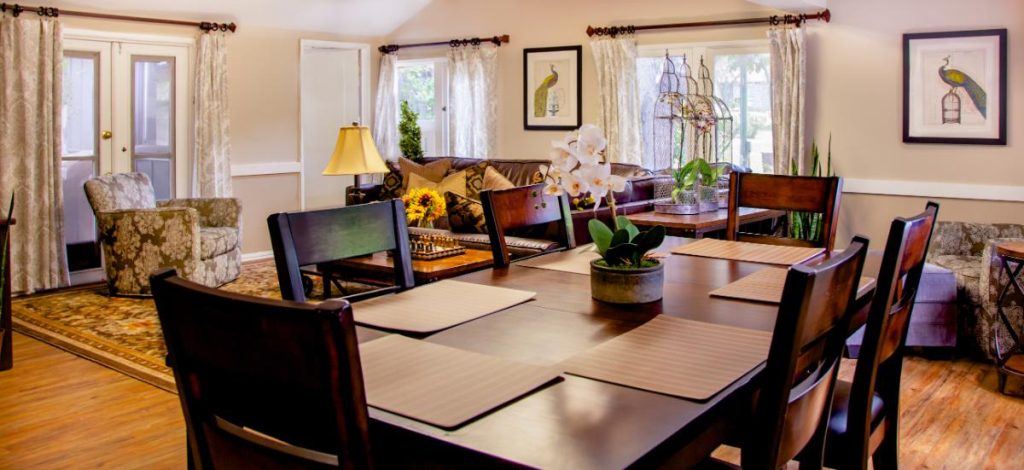
 The Briar Program is our residential program for adults 18 and older living with substance use disorder or alcoholism, in addition to those managing co-occurring mental health conditions. The program runs on our 25-acre campus in Pasadena, and is built around a simple idea that recovery has a better chance of success when the setting is safe, serene, and supportive.
Request a free assessment or call (877) 579-9103, any hour of any day.
Housing in Bungalows, Not the Hospital
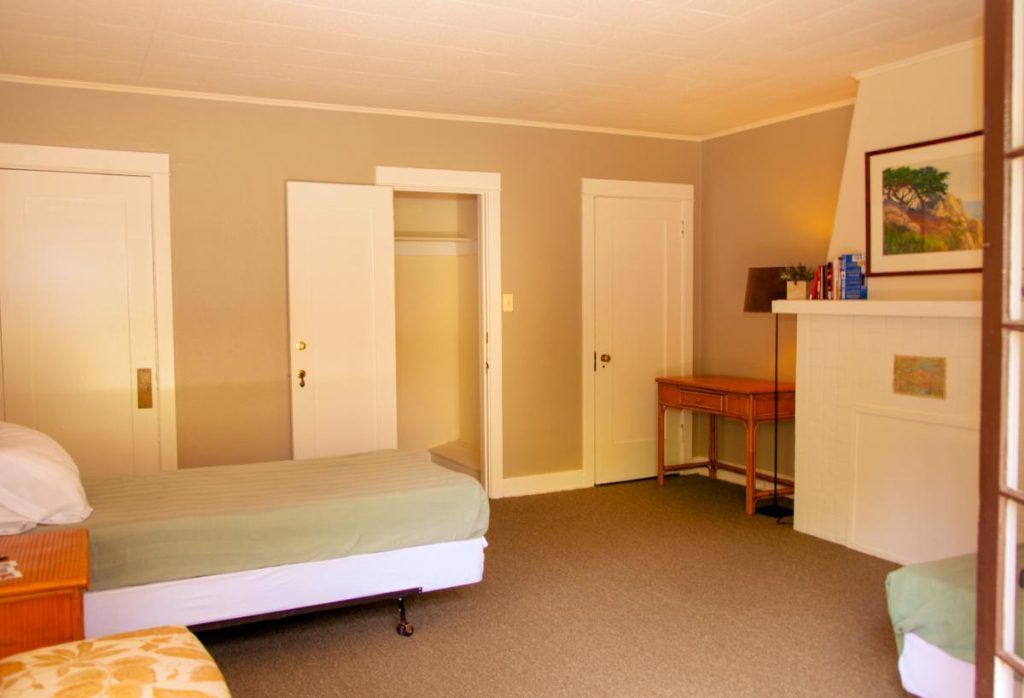
This is the part worth understanding before anything else. Briar Program clients live in our residential bungalows set among the grounds. Bungalows that are set apart from the actual hospital, with oak trees outside and sprawling lawns between them. We have 18 residential beds, which keeps the program small enough that staff gets to know you much better than if you were in a larger program.
There is an outdoor pool, a tennis and basketball court, gardens, and benches scattered across the property for the conversations that happen between sessions. The hospital is named for the oak trees on the campus grounds. "Las Encinas" means "the oaks," and they were the reason McBride bought this land in the first place. They're still here.
Read our story from 1904 to today.
Who the Briar Program Is For
At Las Encinas, we treat substance use disorder and alcoholism. Co-occurring conditions including depression, anxiety, bipolar disorder, PTSD, and trauma are treated alongside the substance use, if present.
People who come to Las Encinas for residential treatment have already tried other programs. Residential treatment makes sense when drinking and/or substance use has created serious challenges in your day-to-day life, or when previous attempts at outpatient care haven't worked. It's often the right level of care for people who need medically supervised detox before treatment can begin. Individuals who struggle with substance use disorder and a psychiatric condition would benefit from this level of care, as well.
Learn more about the full range of conditions we treat.
Detox Comes First
If withdrawal is a concern, treatment starts with supervised sub-acute detox on campus. Registered nurses provide 24-hour coverage throughout the detoxification process, with medical staff available, as needed. There is a pharmacy on site, which means medication adjustments don't have to wait for delivery. Detox and residential treatment happen in the same location, with the same team.
Your Care Team
Residential treatment at Las Encinas is delivered by a multidisciplinary team. Depending on your treatment plan, your team may include:
- A medical doctor / addictionologist
- A licensed family therapist or social worker
- A certified chemical dependency counselor
- Psychiatric nurses
- A dietitian
- Occupational and recreational therapists
- Additional substance use disorder specialists
Care is coordinated 24 hours a day, seven days a week, and you can always speak with your doctor outside of sessions if you have questions.
What Treatment Looks Like at Las Encinas
Every patient receives an individualized treatment plan based on your intake assessment. Each plan changes from person to person, but the program draws on:
Clinical therapies: Cognitive behavioral therapy, mindfulness practices, art therapy, and music therapy. Psychotherapy groups, psychoeducational groups, and substance use education groups run throughout the week.
Focus groups and consultations with an MD or addictionologist: Direct physician access is built into the program structure rather than reserved for scheduled reviews.
Life skills education: Coping strategies, relaxation techniques, problem solving, assertiveness, nutrition, personal health and fitness, and a practical curriculum for what comes after discharge.
Therapeutic exercise: Yoga, tai chi, tennis, volleyball, swimming, and basketball, using the campus facilities.
Intensive family therapy: Substance use disorder rarely affects one person in isolation, and recovery holds up better when the people around you understand what they're supporting.
Peer-led recovery groups and spiritual exploration: Peer-led groups run alongside clinical programming.
A Day in the Briar Program
Structure is part of the treatment. Here's what a typical weekday looks like:
| Time | Activity |
|---|---|
| 7:00 to 7:30 am | Wake up |
| 7:30 to 8:00 am | Breakfast |
| 8:00 to 9:00 am | Yoga or gym |
| 9:00 to 10:00 am | Goals |
| 10:00 am to 12:00 pm | Group meetings: relapse prevention, radical acceptance, mindfulness, improving boundaries, myth vs. authentic self |
| 12:00 to 1:30 pm | Lunch |
| 1:30 to 2:30 pm | SMART Recovery |
| 2:30 to 3:30 pm | Recreation |
| 4:00 to 5:00 pm | Visits |
| 5:00 to 5:30 pm | Dinner |
| 6:00 to 7:00 pm | Free time |
| 7:00 to 8:00 pm | AA, NA, or CA meeting |
| 8:00 to 9:00 pm | Community wrap-up and goals |
| 9:30 to 10:45 pm | Fellowship and program assignments |
| 11:00 pm | Lights out |
You can also review our visitation hours and what to pack before you arrive.
Families Are Part of The Solution
We run Briar Program Family Information Sessions for the people supporting someone in treatment. The framing we use is supporting recovery, supporting families, supporting hope, and it's meant literally. Families arrive with questions nobody has answered for them, and often with exhaustion nobody has acknowledged. Intensive family therapy is part of the residential program itself, and additional family sessions can be arranged through Case Management.
Aftercare Is Also Provided
Discharge is where a lot of treatment quietly falls apart, so we don't treat it as the end of our involvement. Transition and aftercare assistance is provided to ensure you are not left without supportive resources when you discharge. That includes follow-up contact and referrals to self-help groups, private practitioners, sober living facilities, and community-based outpatient resources. If a step down to our own intensive outpatient program is the right move, that pathway is available too. We also maintain a list of outside resources for ongoing support.
Paying for Residential Treatment
We want to be direct about this, because it's the question families most often discover the answer to at the worst possible moment.
Residential addiction and dual-diagnosis treatment is not covered by Medicare or Medi-Cal. Both programs do cover inpatient psychiatric stabilization and Medicare covers inpatient detox, but residential treatment is not covered. If Medicare or Medi-Cal is your only coverage, our Assessment and Referral team can talk you through what is covered here and what other options exist.
Self-pay is accepted by Visa, Mastercard, American Express, Discover, or personal check. Our admissions team will verify your benefits before admission so you know what is covered, and Assessment and Referral staff can provide current rates. See our full list of accepted insurance plans.
How Admission Works
Assessments are free, confidential, and available 24-hours a day, seven days a week through our Assessment and Referral Department. You don't need a referral to call, and calling doesn't commit you to anything.
- Initial screening. We'll talk through substance use history, current risks, and what you need right now.
- Admission paperwork. Our team verifies benefits and handles the coverage questions with you.
- Clinical intake. Assessments for withdrawal risk, mental health symptoms, and co-occurring conditions.
- Stabilization first if needed. If withdrawal is a concern, detox and medication coordination come before anything else, including a review of your current prescriptions.
- Your treatment plan. Built from your assessment results and any information from your existing providers.
Bring a photo ID, your insurance information if you have it, and a list of your current medications. We'll walk you through allowed items and medication verification before you arrive. Our admissions process page covers this in full.
Frequently Asked Questions
How Long Does Residential Treatment Last?
Length of stay is determined clinically, based on your assessment, your progress, and your treatment plan. The Briar Program is designed for longer-term care rather than short stabilization, and your team will discuss expected timelines with you and your family during intake.
What's the Difference between Residential Treatment and Inpatient Care?
Inpatient psychiatric care at Las Encinas is acute stabilization in a hospital setting, typically shorter and focused on getting someone safe and stable. Residential treatment is longer, takes place in the campus bungalows, and focuses on substance use disorder and dual diagnosis with a full daily program of therapy, education, and recovery work.
Do You Treat Mental Health Conditions alongside Substance Use?
Yes. Dual diagnosis and co-occurring conditions are treated as part of the same plan, not sequentially. Your care team includes both psychiatric and addiction specialists.
Can I Have Visitors?
Yes. Visiting time is built into the daily schedule, and the campus was designed with visiting families in mind. See our visitation hours for current times and guidelines.
Where Exactly Are You Located?
2900 East Del Mar Boulevard, Pasadena, CA 91107, on the east side of Pasadena. We're about 0.6 miles south of I-210 and roughly six blocks from the Sierra Madre Villa station on the A Line.
What If I Need Help Right Now?
We do not diagnose or provide counseling online. If you're in immediate danger or at risk of harming yourself or someone else, call or text 988 to reach the Suicide and Crisis Lifeline or go to your nearest emergency room. For a free confidential assessment, call us any time.
Talk to Someone Today
Assessments are free, confidential, and available any hour of any day. Whether you're calling for yourself or for someone you love, our Assessment and Referral team will help you figure out what level of care makes sense, even if that turns out to be somewhere other than here.
Call (877)579-9103 or request a free assessment.
If you're experiencing a mental health emergency, call or text 988 or go to your nearest emergency room.